The Team Behind the Screen: Simulation Racing
Racing games have been around since the 1970s, with classics such as Atari’s Gran Trak 10, “one of the first games to feature a steering wheel as the controller.”

Many other racing games were played over the years, but Gran Turismo released in 1997 quickly became the most popular. It was one of the first ultra-realistic simulation racing games and today, even has a movie named after it on Netflix.

Eventually, with the internet, came the magic of connection. People around the world began to share their experiences and compete against one another. “Realistic graphics” and “improved controls” catapulted the popularity of racing online. In the early to mid-2000s, games such as iRacing and Assetto Corsa marked a new era of sim racing which had now become even closer to the real thing—allowing many to experience the thrill of racing without even stepping foot in a car.
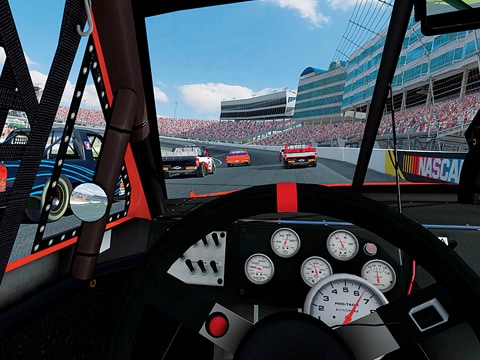
iRacing 2003
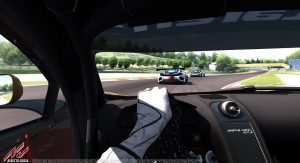
Assetto Corsa 2013
As motorsports came to a standstill in 2020 during the pandemic, the popularity of sim racing skyrocketed. With no in-person competitions, crowds turned to watching racing online and drivers turned to competing online. Competitions such as eNascar iRacing Pro Invitational Series and F1’s Virtual Grand Prix Series that were held during this time, helped boost the popularity of sim racing even more. F1’s virtual event “achieved a record-breaking 30 million views across TV and digital platforms.” In 2023, the release of the movie Gran Turismo captured the eyes of many, an audience ranging from simulation drivers to fans of the sport and even those with no prior understanding of simulation racing. This movie was described as, “a nod to [simulations racers] passion and a beacon of possibility for what can be achieved with dedication and skill.” Events such as these brought sim racing into a new light. With a broader audience and a deeper sense of understanding, the world of virtual racing had changed for the better.
You may be wondering why you are getting a breakdown of the history of sim racing. Well, that is because here at Le Pit Club we have a brand-new sim racing team of our own! Allow me to introduce you to them…
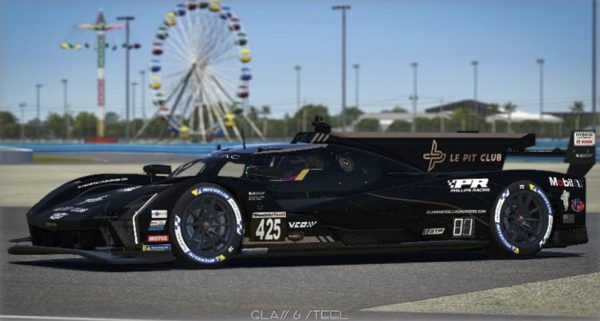
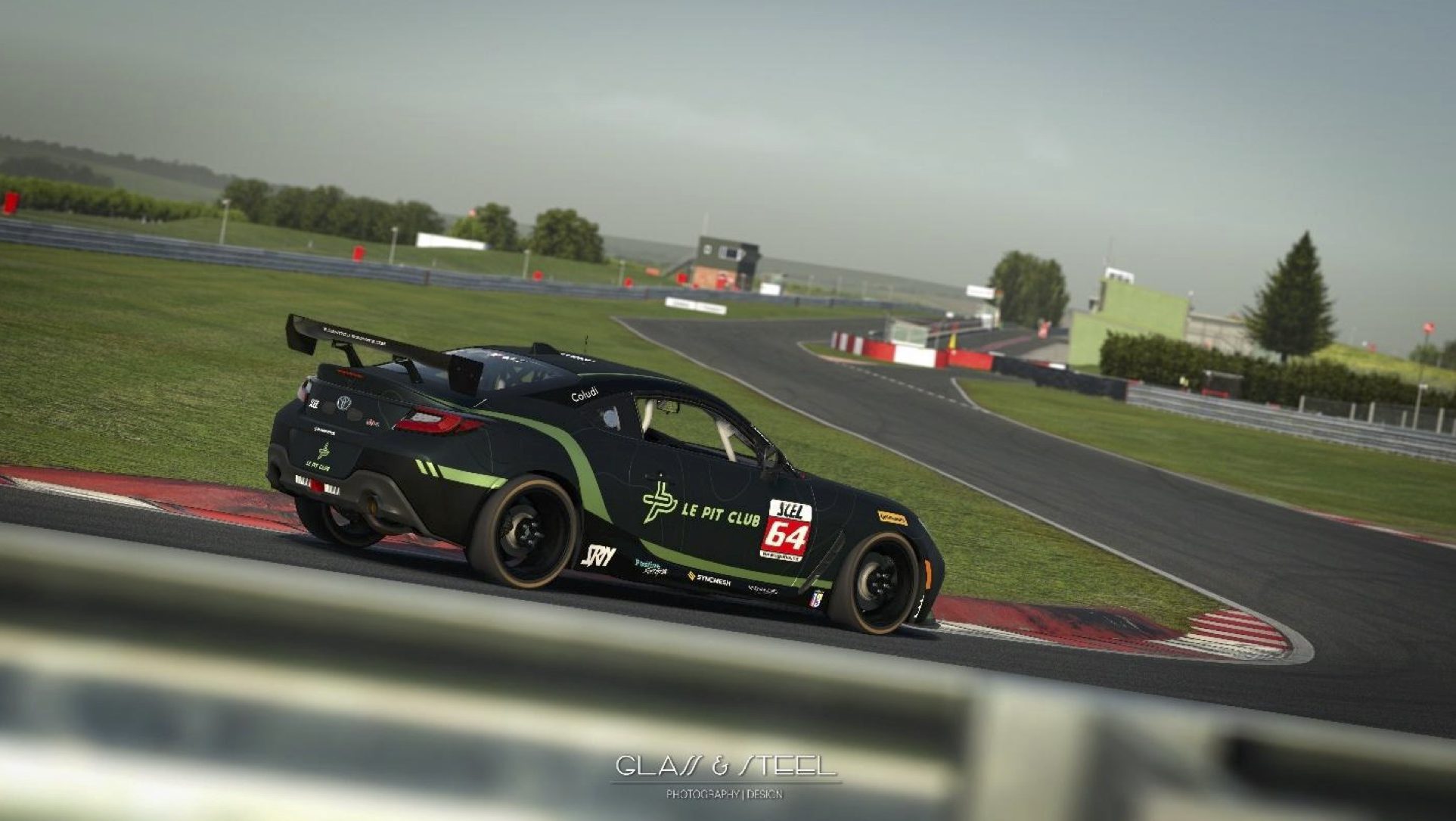
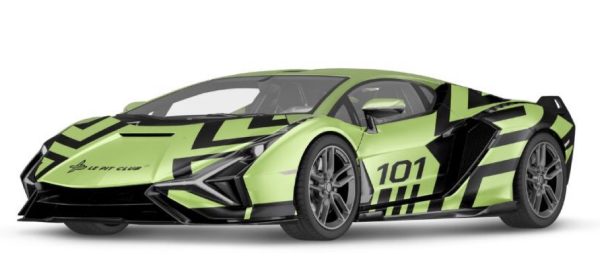
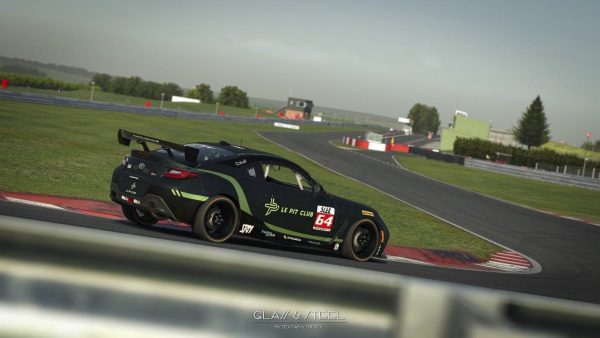
Le Pit Club Cars Driven by Sim Racing Team
Blayke Phillips
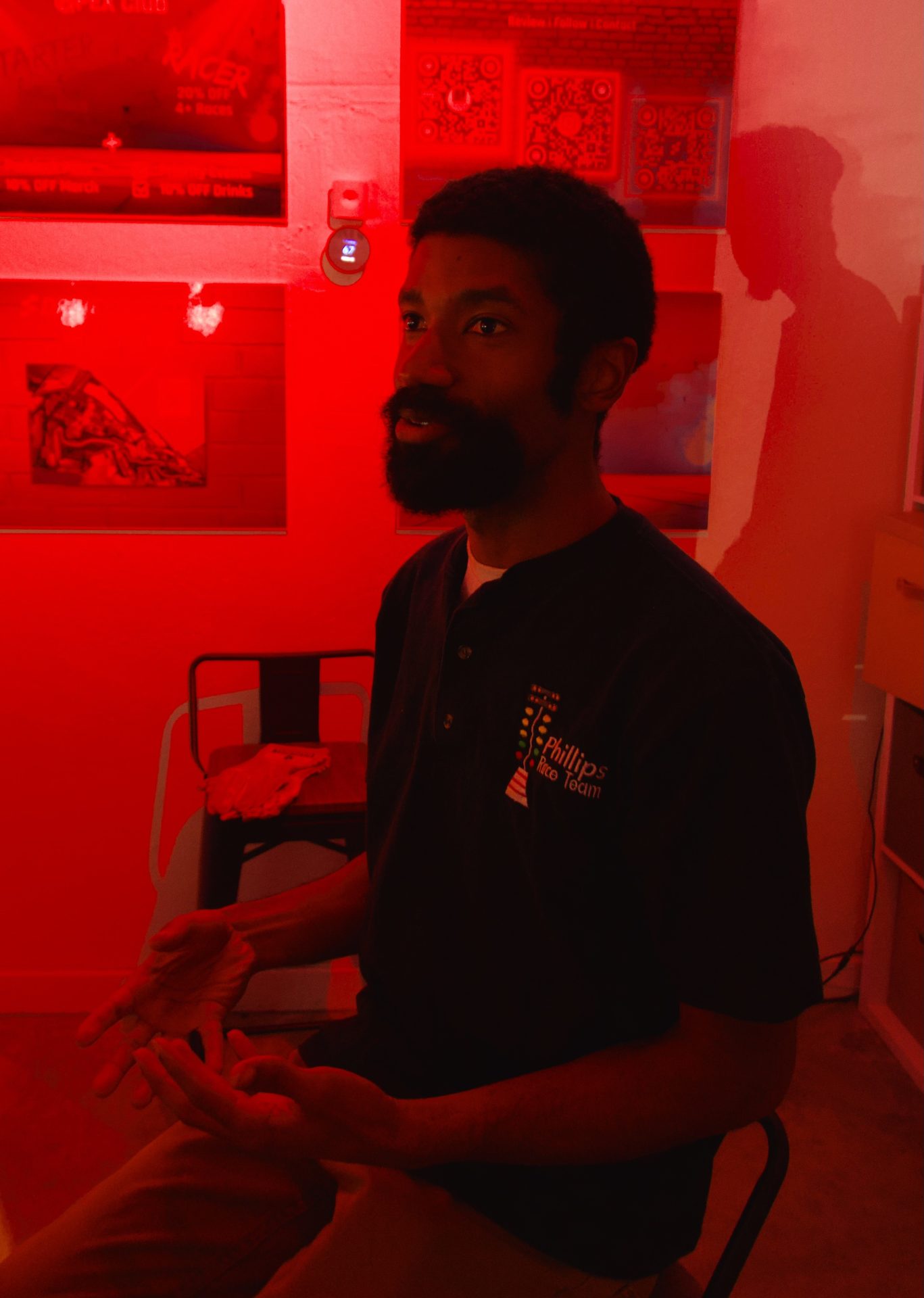
Blayke was brought into the world of motorsports through NHRA drag racing. While pursuing an education, Blayke still followed his passion by racing virtually. He even brought his own steering wheel with him to college and set it up right on his desk. Now, he is dedicated to sim racing, coaching, and building cars.
Lee Martinez

Recently, Lee found himself getting back into motorsports through sim racing. He shares his love of racing with his uncle. They both find inspiration in the Formula 1 driver Ayrton Senna, whom they model their driving styles after. Lee says he practices sim racing daily and is as dedicated as ever.
Josh Dillon

Josh’s love for motorsports and cars started early—as a child, his favorite movie to watch was Disney’s Cars. He grew up karting and now does sim racing during the off-season as a way to practice his skills and continue racing. He hopes to one day become a Formula 1 driver, inspired by teams like Red Bull and drivers like Max Verstappen.
I had the opportunity to meet with them and learn more about sim racing. I must admit, I did not know much before this experience, but they provided unique insight into what it means to be a simulation driver. How does it compare to “real” racing? Are the races as entertaining? As thrilling? What does it feel like to race on a machine?
Why sim racing?
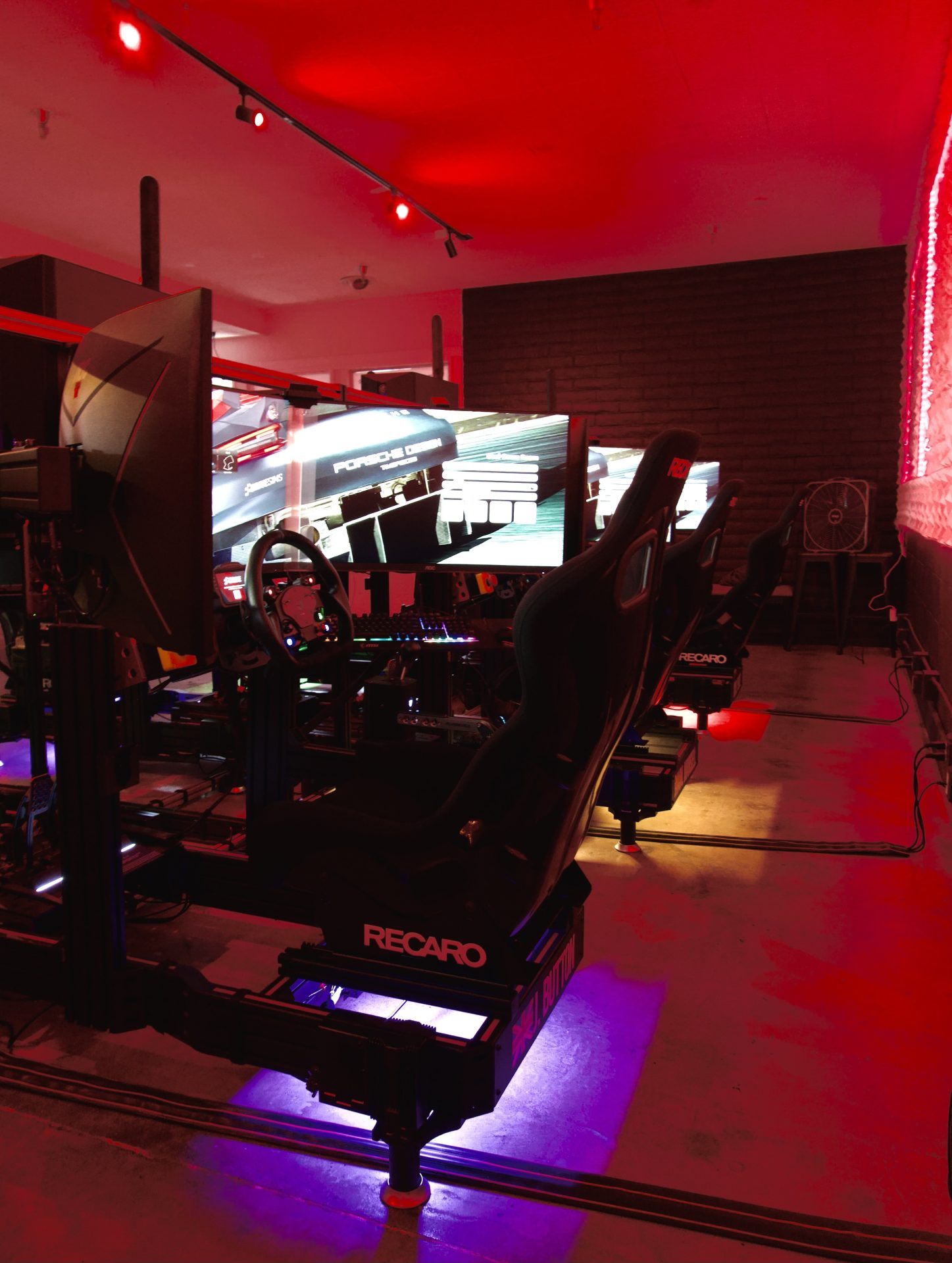
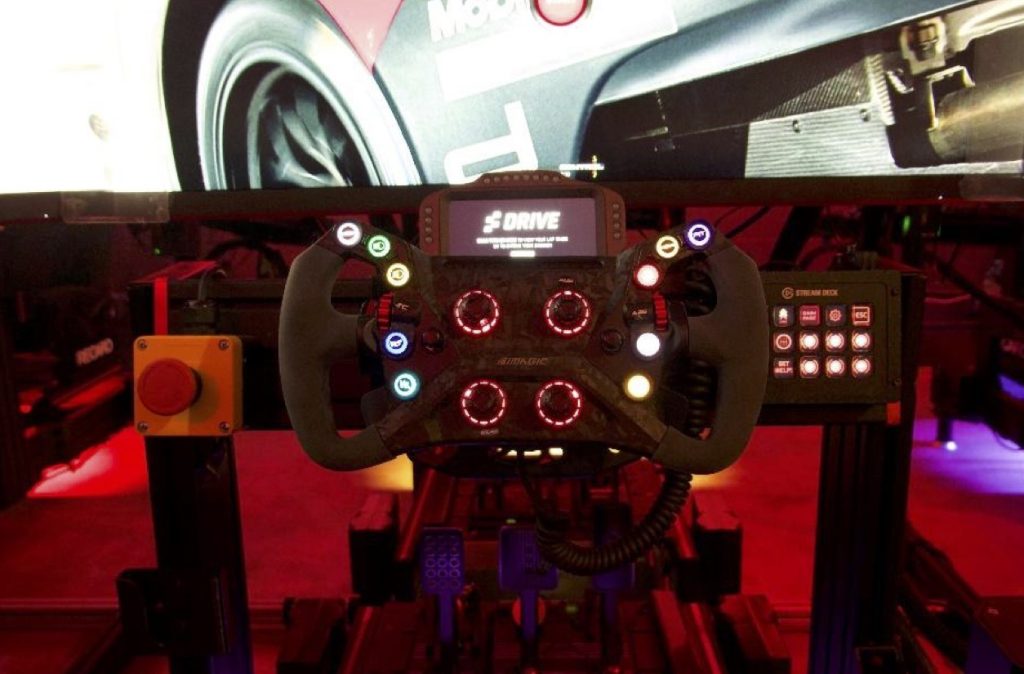
I met the team (Josh, who lives in Colorado, through a phone call) where they compete in their online races at Shift Arcade. People come here to practice tracks before driving on the real thing, to test out different cars or driving styles, and even just for fun! Walking in, you are met with a row of Recaro seats—used in real racing— and machines/equipment, each equating to around $30,000. There were also different steering wheels on each machine, each one having certain benefits for particular tracks.
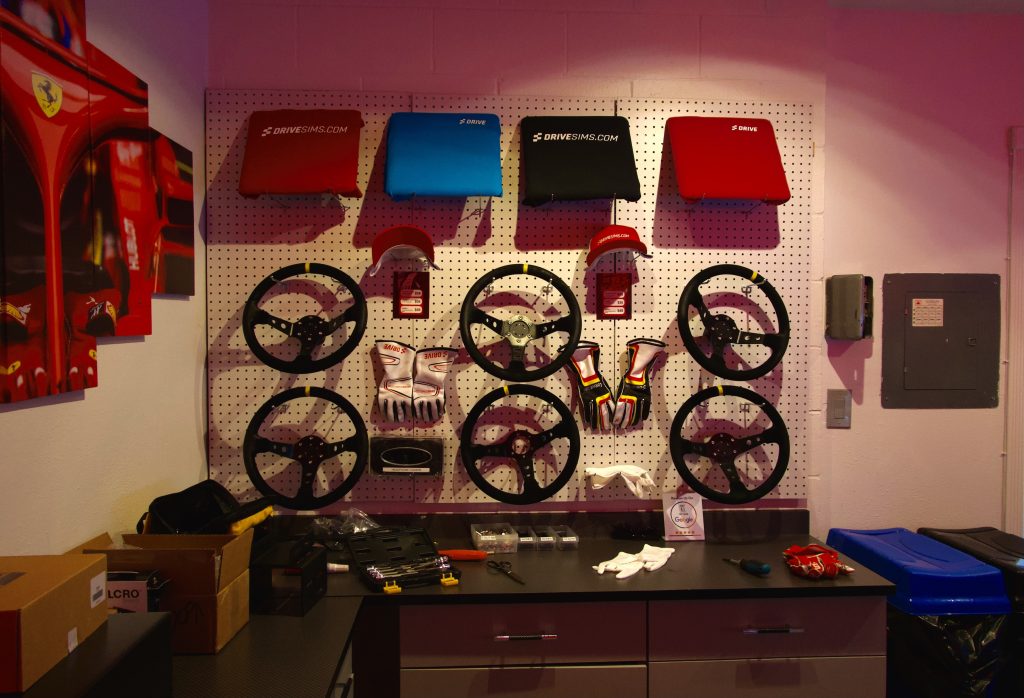
I was handed a pair of white gloves that did not compare to the racing-approved, fire resistant gloves that Blayke and Lee use while driving. Even though these drivers compete online, they still use items seen in the motorsports world, creating the most realistic experience possible.
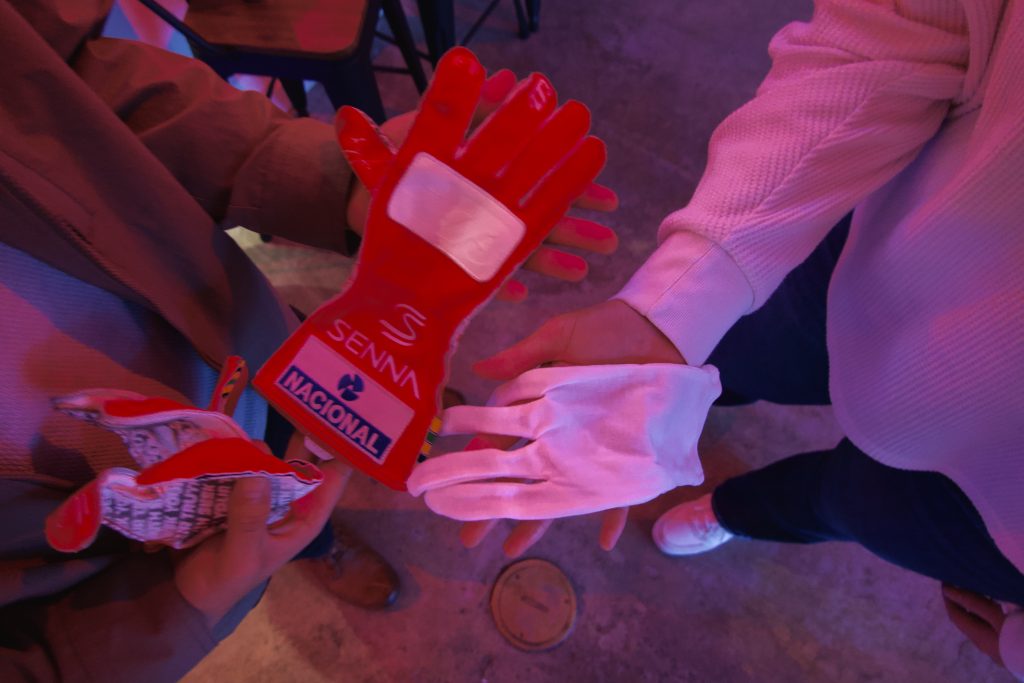
Lee’s Ayrton Senna Gloves
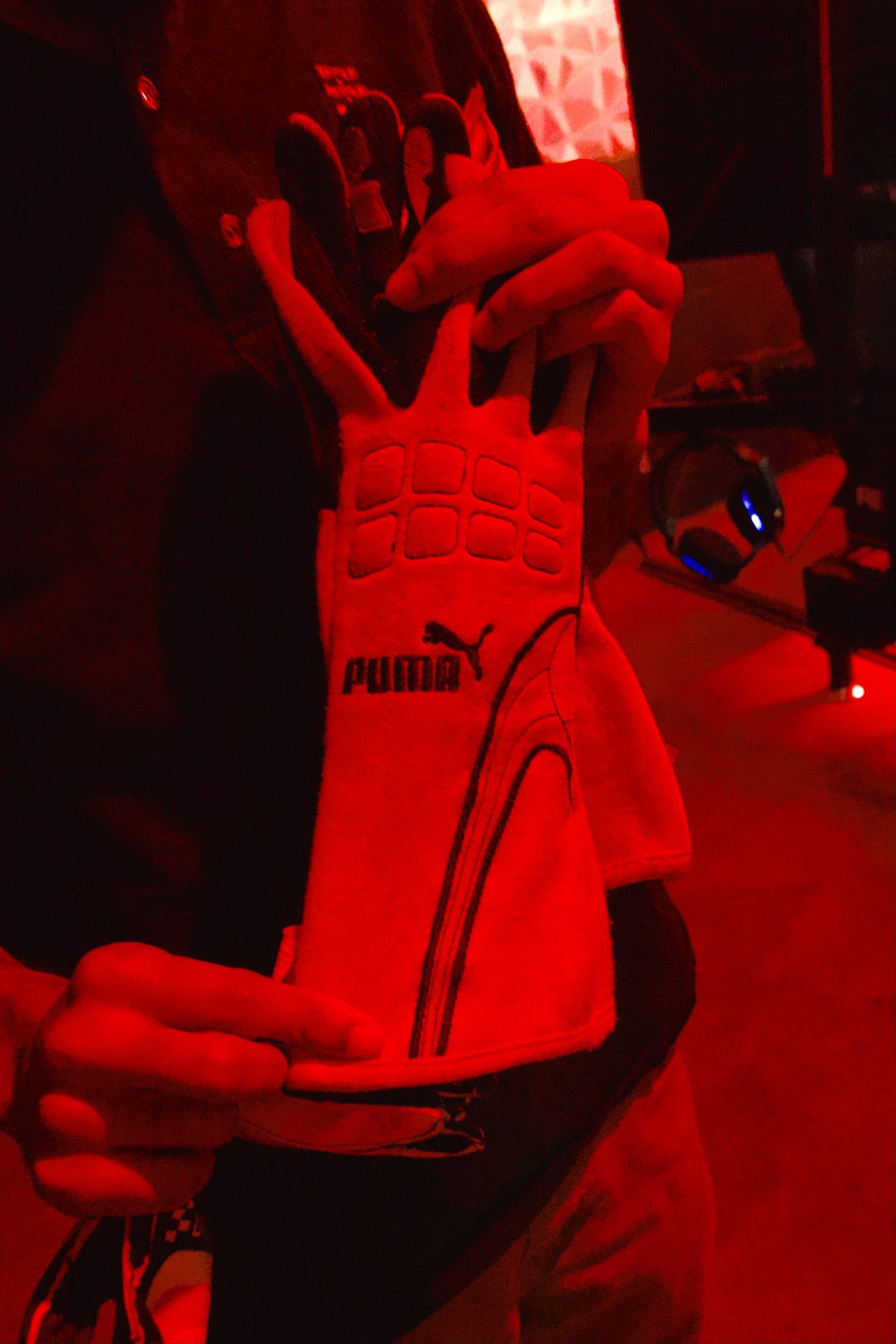
Blayke’s Gloves
After a brief explanation, barely scratching the surface of what the equipment is capable of, I was ready to race. I sat in a surprisingly comfortable seat, surrounded by three screens, and began to take in my surroundings. With a total of 600 cars and 200 tracks located all around the world, they chose the most beginner-friendly car available for me and a local track, Laguna Seca Raceway. My fellow racer, Kayla (our Le Pit Club photographer) who joined in on this experience with me, expressed that she was familiar with this track and its infamous corkscrew turn—that did not sound good. I knew to follow the line, the ideal path for the track: green means gas, yellow means lift off the gas, and red means brake. I asked if this was always accurate and the team informed me it depends on the car, so that meant I had to take it with a grain of salt and experiment with what was best.
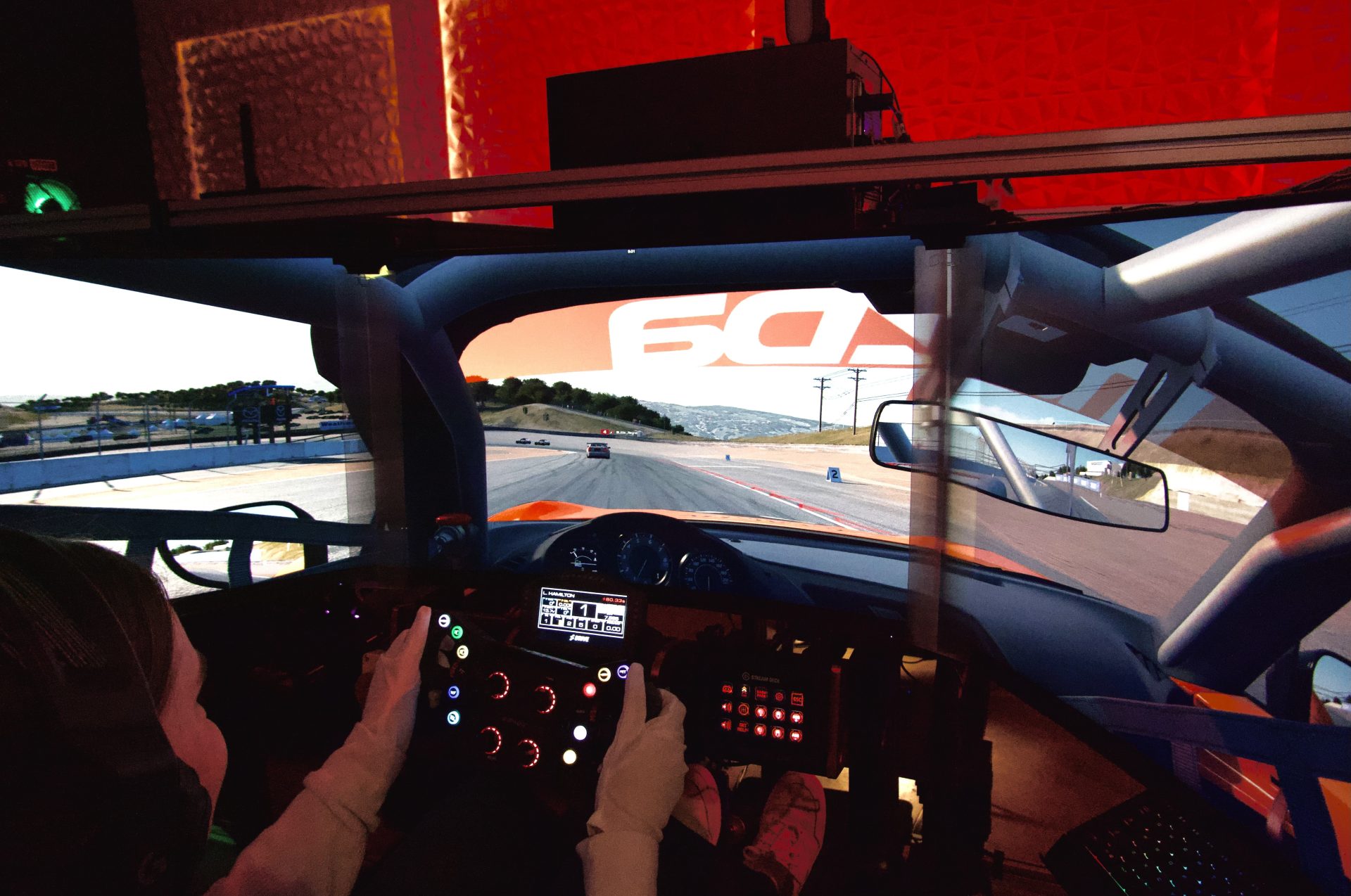
Not confident in my skills, I didn’t dare touch the gear shift, my left foot stayed planted on the brake and my right on the gas—yes, you drive with two feet. I was ready to go. Kayla and I raced down the track, going a whopping 35 mph. I looked down at my speed and realized I truly could not tell how fast I was going. I am sure with experience it becomes easier, but to the untrained eye, and without the sensation of feeling the road, it was almost impossible.
Surprisingly, 120mph and 35mph felt the same. Lee stated that eventually “you get used to driving by vision and sound” rather than feeling. He also mentioned that the Laguna Seca track on this machine was one of the bumpiest. While you cannot feel the speed of the car, the seat does move on this rig. If you do not have the correct posture while driving, you can actually injure your back.
All of a sudden, I spun out, ah the corkscrew, a quick left, then right turn with an elevation drop. At first, I couldn’t tell which way to go and which way to turn the steering wheel. It was very disorienting as I tried to get familiar with looking at the screens and excessive number of controls on the wheel.
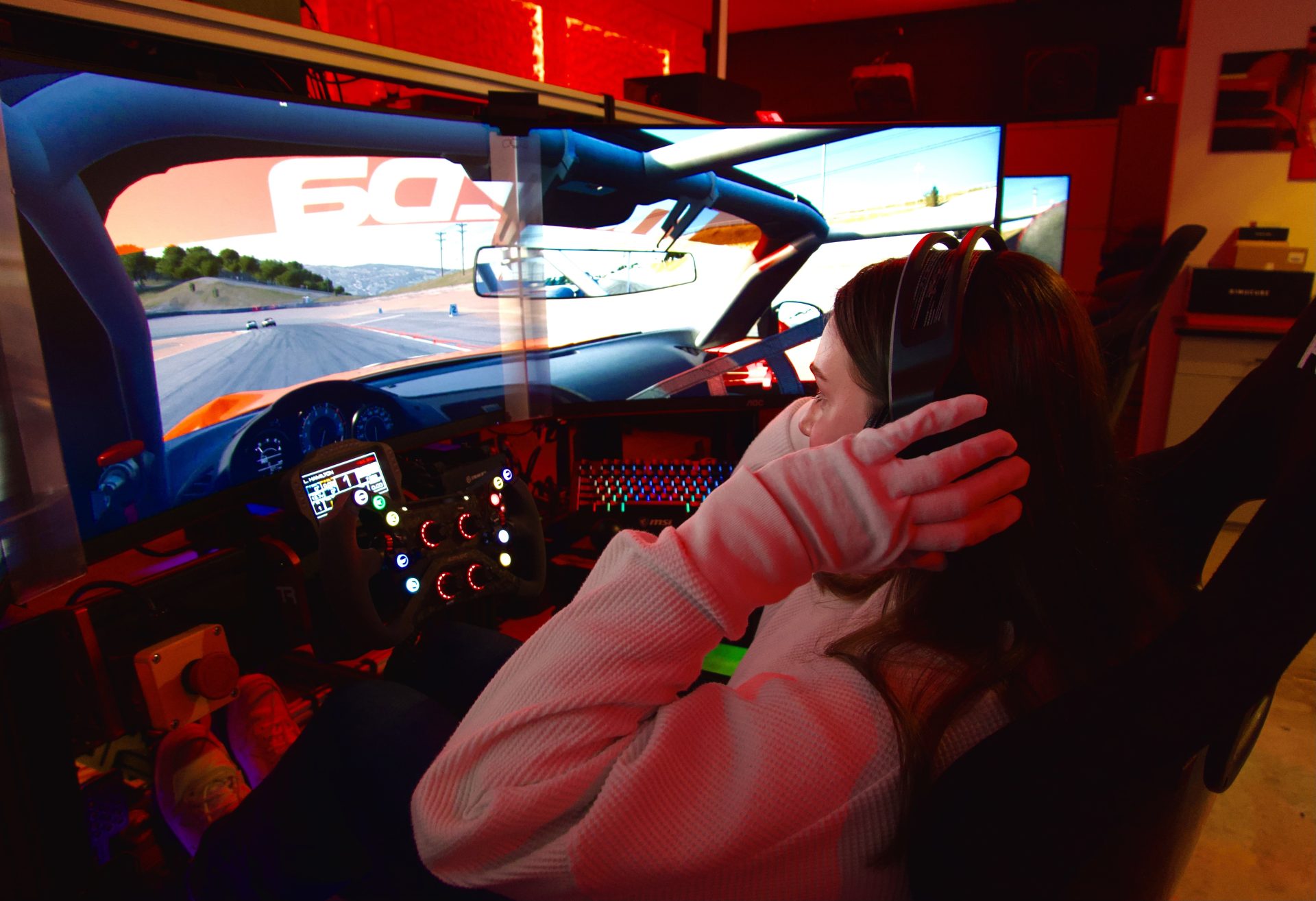
However, the positive voices around me encouraged me to continue despite the setback. Here, I truly felt the importance of having a team in this sport. They had mentioned that virtual racing can often get lonely. Since joining a team, they had regained their spark for sim racing through each other’s motivation. It wasn’t until I finally put the headset on that I became fully immersed in the race and truly understood how realistic it felt. I could hear the roar of the engine, my fellow drivers speaking from their cars, and even my own pit crew giving me pointers.
Blayke and Lee joined us on the track, each in their favorite car, lapping us almost instantly. They drove effortlessly through the turns, knowing exactly what was next and how best to drive their vehicle.
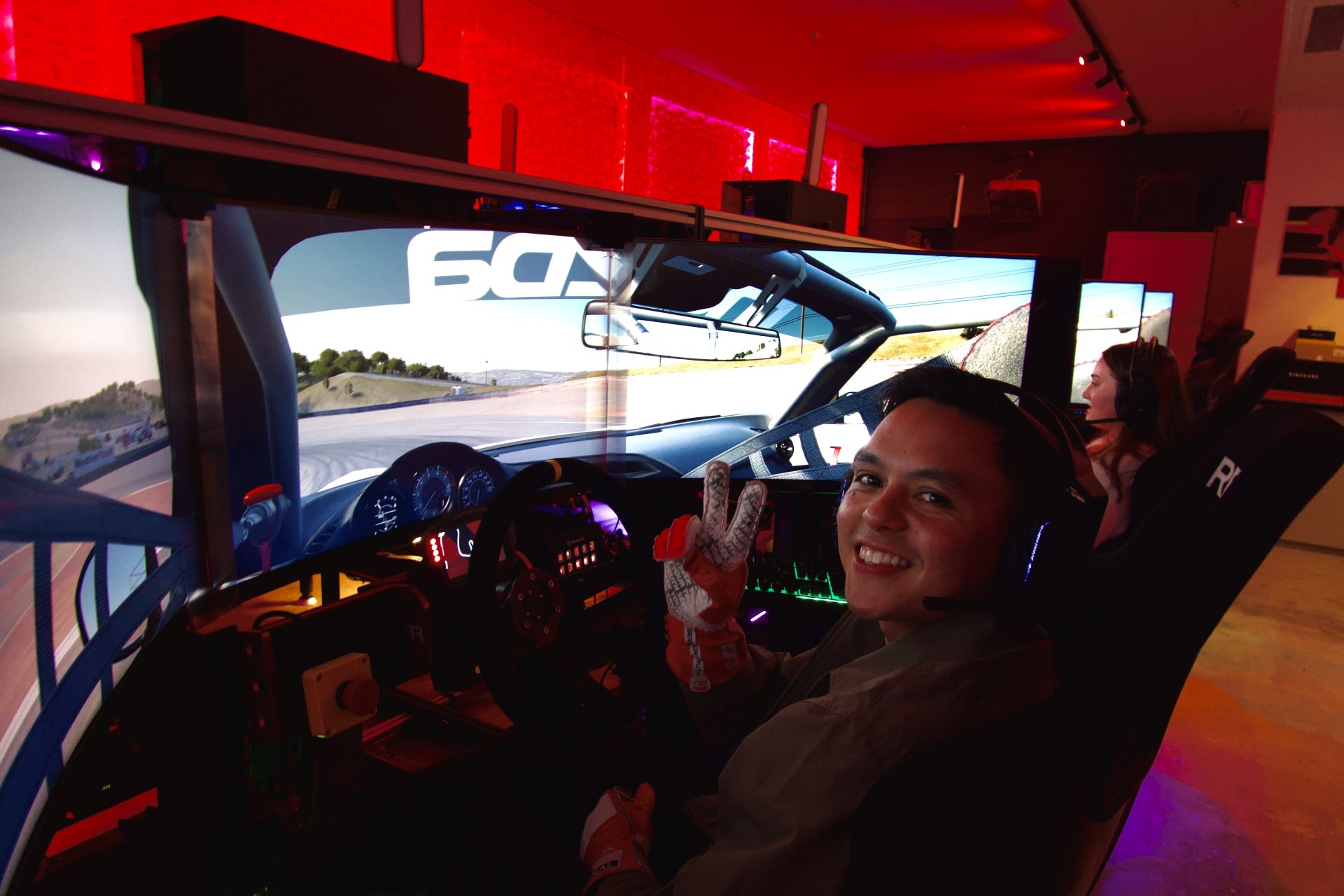
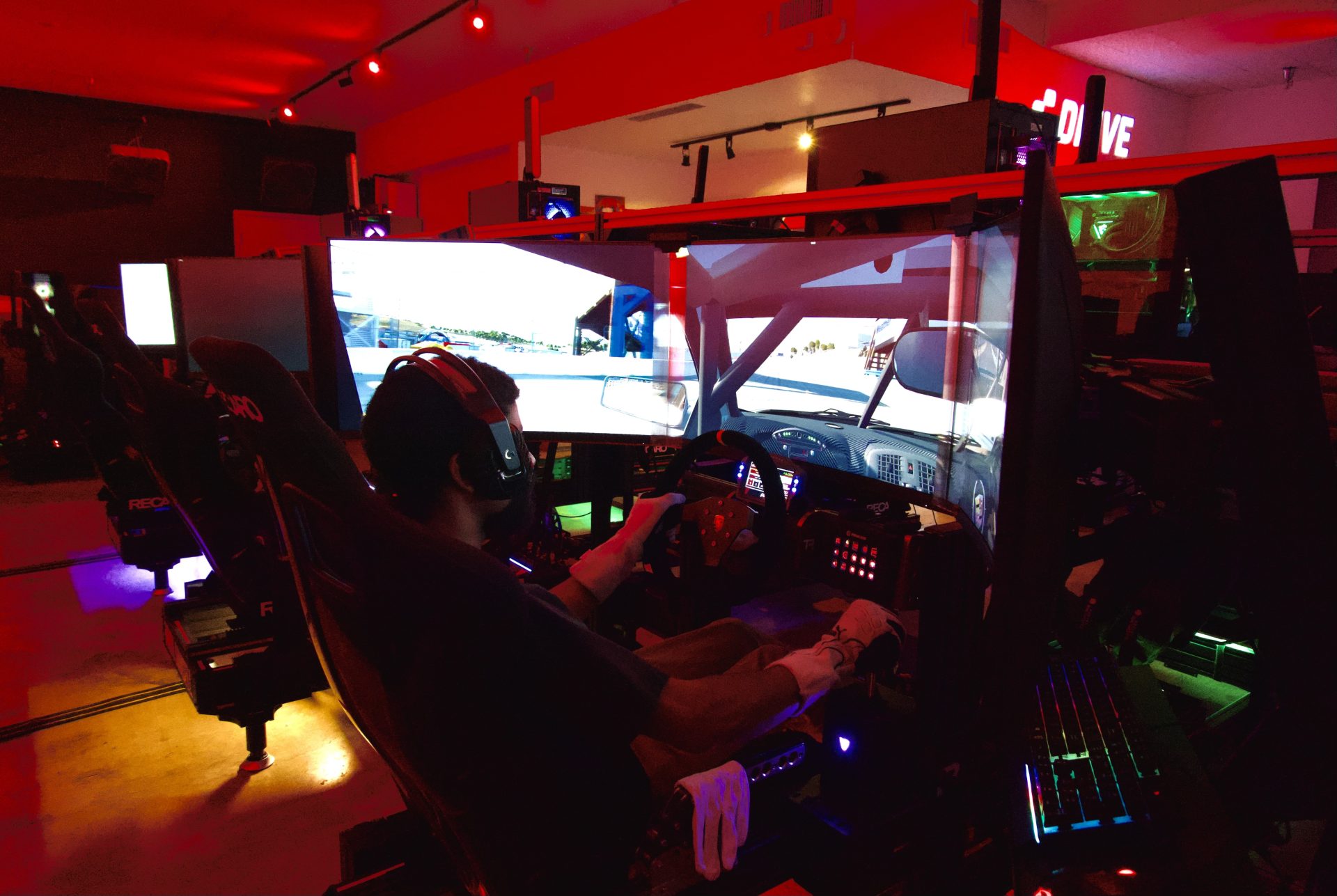
As the laps went on, I became more comfortable with the controls and increasing my speed. Practice, practice, practice. That is what sim racing is all about. Unlike real racing, it allows you to make mistakes, learn the track, test different cars, experiment with fuel levels, and find your best driving style, without the fear of wearing out your car. On one of the laps, I tried to pass Kayla, going off of the ideal path, and ended up crashing right into her. My seat shook and I spun out once again. The beauty of it being a simulation, though, was that I could experiment and make mistakes like that without anyone getting hurt.
I asked each of them how sim racing compares to real racing. Josh said that everything was pretty much the same except the feeling of the speed and the g-forces. Everyone else agreed. Blayke added that it was an “overload of sensation when actually on the track [in person].” The loud sounds and smells produced by the cars can be overwhelming to witness after racing virtually. Despite those differences that virtual driving cannot replicate, everything about sim racing and real racing is quite similar. It is an amazing option for those trying to get into the motorsports world or want to use it as practice for their races.
In an article published by AKJournals, they speak about the advantages of virtual sports and how “there is a low entry barrier, people can obtain a lot of experience right from the start and develop and succeed quickly, but many people underestimate the physical and mental strength this requires.” While sim racing is a great way to build your experience, compete in races, and practice driving, it is anything but simple. Sim racing is a huge commitment and can be time consuming, if you want to be successful, you need to put in the work. It takes hours of analyzing data and figuring out how different cars and parts work on certain tracks or specific turns. It is trial and error but also requires an immense amount of knowledge about cars and racing. As I mentioned before, it is also important to maintain good posture and strength when driving so as not to injure yourself.
Together, Blayke, Lee, and Josh recently competed in the Daytona 24, a 24-hour race on a virtual track in Florida. I asked how long they drove for, and they said around 2 hours or 3-4 if really pushing it, before switching drivers. Some may think simulation racing could be boring compared to the real thing, but unexpected events still happen, like cars spinning out or running out of fuel. In this first race the team competed in, Lee had a technical problem at the beginning, which led to him being set back. They have to overcome challenges just like in real racing. The team also spoke about how working with other drivers can be difficult at times when competing in the same race. They each have completely different driving styles and finding one that works for each of them during a competition can be a challenging task. Once they work through everything and finally race, Lee mentioned that competing with real drivers and even occasionally beating them is one of the best feelings. They are not just racing with sim drivers from all over the country, but also drivers who compete in real life.
Josh brought up a Formula 1 driver who he is inspired by—Max Verstappen. Along with racing on the tracks in person, he also races virtually. Josh informed me that Verstappen even has simulation equipment in his motor home that he uses while traveling. The Formula 1 driver is a huge advocate for the importance of sim racing and the realistic experience it provides. Sim racing is not just a video game. It is a highly realistic simulation that allows the driver to compete in racing virtually. It requires strength, focus, knowledge of the sport, and most importantly hard work to become successful. In an article by The Athletic, they state, “Sim racing has turned into a sport of its own, with car manufacturers and professional motorsports teams either backing drivers or creating teams.” Over the last few years, simulation racing has turned into more than just a hobby for many. Real-life drivers are using it to compete, and new drivers are discovered through their talent in the virtual world.
In the same article, Verstappen also speaks more about sim racing and how it compares to racing in real life. Like our sim racing team also mentioned, the only real difference is the feeling of the speed and now being in a real-life scenario where mistakes have larger consequences.
When speaking about a sim driver transitioning to real-world racing, he says they may have thoughts like, “Wow, I’m in a real car with a real engine. If I crash, it’s going to cost money, and I can hurt myself.” This is one of the biggest hurdles a driver may encounter when getting into a racecar; however, all the other skills they have gained will sim driving will transfer over. Overall, Verstappen is one of the many advocates involved in the motorsports world for the importance of simulation racing and how it allows more people to become involved in such an expensive sport.
This was a significant aspect every one of the team reiterated to me when speaking about sim racing—how it is cost-effective. It allows them and others to be able to race without having to worry about the financial impact. Racing is one of the most expensive sports in the world. Yes, you could build/buy a car for a reasonable price, but the maintenance that comes with it adds up quickly. Josh mentioned that a lower-class kart costs around $7,000 just to get you the basics. Sim machines are just an upfront cost, making them much more affordable in the long run. You can purchase something like they use at sim stores, but a motion rig is not necessary to have a good driving experience and be able to race. Sim racing has allowed them to pursue their passion, without it, they may have never been able to race.
Meeting with the sim team gave me a new appreciation and understanding of simulation drivers. Being on the machine and testing out how it feels to be a racecar driver was truly a thrilling experience. Being just an okay driver myself, having the freedom to reach high speeds, maneuver around corners, and test my car’s abilities, was something I never thought I would experience. With my fellow drivers that day, I was also able to feel the importance of being on a team, learn the ins and outs of virtual driving, and most importantly, realize that simulation racing is a sport and one of the best ways to become a skilled driver, even if you have never been on a racetrack.
Become involved in the world of simulation racing and watch our Le Pit Club team’s next race on March 15th here. See more of their races here.